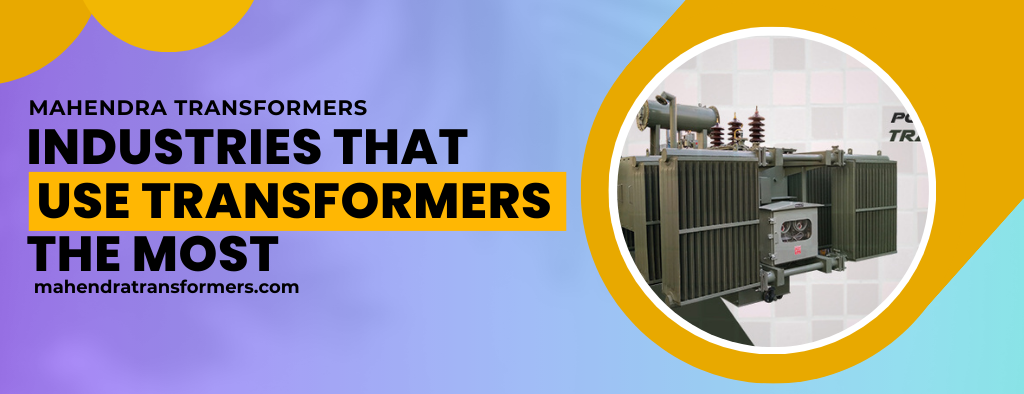

Proper selection of transformer sizing is vital for the reliability, effectiveness, and safety of the process within industries. An undersized transformer tends to overheat and experience problems like fluctuations in voltage and even unexpected power cuts, while an oversized transformer ends up having very high costs. Experience from experts in the distribution of transformers, for instance, Mahendra Transformers, can help in selecting the right size.
1. Calculate the Total Electrical Load
Step 1 is to determine the total power requirement for the facility. All electrical equipment will be considered, such as:
- Industrial motors, pumps, and compressors
- Production machinery and processing equipment
- HVAC system and lighting
- Welding equipment and other electrical load requirements
Total connected load will be calculated in kW/kVA. But not all these electrical loads operate at the same time; hence, demand factor/load diversity needs to be considered.
2. Understand the kW and kVA Difference
Transformer size is denoted by the unit kVA, while equipment load is stated in kW.
The formula to be used is:
kVA = Load (in kW) / Power factor x Efficiency
Ultimately, the sizing of the transformer should consider practical scenarios and capacity ratings.
3. Consider Motor Starting and Peak Loads
Industrial machines such as compressors, pumps, furnaces, and large motors can cause high starting currents. Transient current loads, such as high starting current, can cause a drop in voltage if the transformer is not suitably designed.
In deciding on the size, some factors to consider include:
- Type of motor starting and surge current
- Running other heavy machines together
- Variable loads because of the furnaces and welding
- Peak demand at production
You can get more information by contacting Furnace Transformer Manufacturers.
4. Keep Provision for Future Expansion
Industrial plants often have to introduce new machines or increase their capacity. Choosing a transformer with proper allowance for expansion will help to avoid early replacement.
Think about the load increase, new lines, and schedule changes in the future. The extra capacity of the transformer should be calculated based on a load growth analysis, not an arbitrary percentage.
5. Choose the Right Transformer Type
Industrial use cases have different types of transformers designed for them.
- Distribution Transformers: Best suited to step-down voltage for industrial uses, commercial use, and distribution networks.
- Power Transformers: Used for power transmission and substations.
- Furnace Transformers: Specifically designed for industrial furnace applications that need a high current.
- Solar Duty Transformers: Specially designed for solar power applications, taking into account the generation profile and harmonics.
Working with the most experienced Distribution Transformer Manufacturers in India and Solar Duty Transformer Manufacturers in India can help select the right transformer type for the application.
6. Evaluate Quality, Efficiency and Compliance
In addition to the kVA rating, look into the efficiency, insulation system, temperature rise, cooling system, impedance, voltage regulation, and relevant BIS/IEC standards.
Select a good transformer manufacturing company in India which knows about the need of industry for load conditions.
Conclusion
Determining the appropriate capacity of a transformer cannot be done merely by computing the connected load. Other considerations include power factor, peak demand, starting of motors, future expansion, and other application needs. Collaboration with trusted Distribution Transformer Manufacturers is vital for companies to put their money into dependable power infrastructure.
Frequently Asked Questions(FAQs):
1. How would I find the required kVA of the transformer?
The load in kW must be divided by the power factor and efficiency to find the required kVA.
2. What will happen if the transformer is not sized properly?
Undersized transformers will result in overheating, voltage drops, and operational problems.
3. Which transformer should be used in industries?
The distribution transformer, power transformer, and furnace transformer are used depending upon the load requirement and industry application.
4. Why should the future load expansion be considered while choosing the transformer?
Future load expansion will ensure enough capacity for new machinery and production without replacing it early.